
Iran Launches Ballistic Missile Strike Toward U.S. Forces as Regional Tensions Escalate
Tensions in the Middle East intensified after Iran’s Islamic Revolutionary Guard Corps (IRGC) launched multiple ballistic missiles toward U.S. military positions across the region, prompting a swift defensive response from American forces.
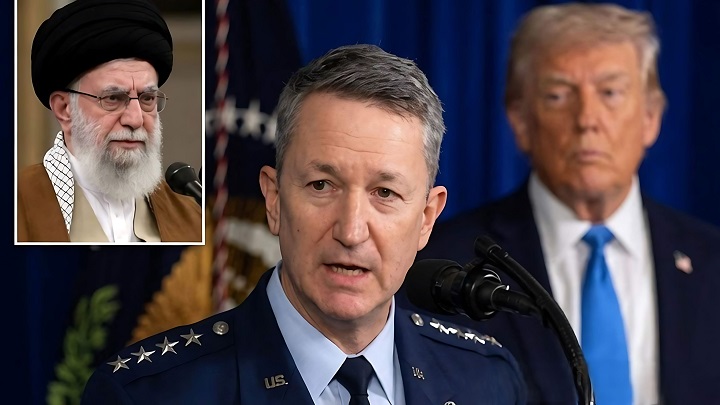
According to U.S. Central Command (CENTCOM), the missiles were fired Tuesday evening at approximately 5:45 p.m. Eastern Time. U.S. officials reported that air defense systems successfully intercepted all incoming projectiles before they reached their intended targets.
The incident marked one of the most serious direct confrontations between Iran and U.S. forces in recent months and underscored the increasingly volatile security environment across the region.
Air Defense Systems Respond
Military officials said American missile defense systems detected the launches shortly after they occurred and engaged the incoming threats.
According to preliminary assessments released by CENTCOM, every ballistic missile was intercepted, preventing damage to U.S. military installations and avoiding reported casualties among American personnel.
Officials described the successful interceptions as evidence of the effectiveness of the region’s integrated air defense network, which has been strengthened in response to repeated attacks involving drones, rockets, and missiles.
Escalation After Months of Attacks
The missile strike follows months of rising tensions involving Iranian-backed armed groups operating throughout Iraq and Syria.
According to military assessments, Iranian-aligned militias have carried out hundreds of attempted attacks against American personnel, coalition forces, and military facilities since early 2026.
Many of those incidents involved drones, rockets, and indirect fire targeting bases where U.S. troops are stationed as part of ongoing regional security operations.
Military officials have argued that the latest ballistic missile launch represents a significant escalation because of its direct nature and the potential risks posed to U.S. service members.
Coordinated Response
Following the attempted missile attack, U.S. forces coordinated with regional partners to conduct precision strikes against facilities that military officials said were associated with the Islamic Revolutionary Guard Corps and its regional operations.
According to officials, the strikes targeted weapons storage locations, logistics centers, and infrastructure believed to support armed groups operating in eastern Iraq.
Military planners stated that the objective was to reduce the operational capabilities of organizations allegedly involved in planning or supporting attacks against American personnel.
Authorities emphasized that the strikes were carefully planned to focus on military-related targets.
Saudi Arabia Joins Operation
The operation also highlighted growing military coordination between the United States and Saudi Arabia.
Officials said Saudi aircraft participated alongside American forces during the response, reflecting increased cooperation between the two countries on regional security issues.
Saudi Arabia has previously accused Iranian-backed groups of carrying out attacks against its energy facilities and other critical infrastructure, making regional defense cooperation an increasingly important priority for both governments.
Analysts say the joint mission signals a closer security partnership as both nations seek to counter emerging threats throughout the Middle East.
Regional Security Remains Fragile
The latest exchange comes during a period of heightened instability across the region.
U.S. forces continue supporting counterterrorism missions, protecting coalition personnel, monitoring regional airspace, and working with partner nations to deter further escalation.
At the same time, diplomatic efforts involving multiple regional governments continue in hopes of reducing tensions and preventing additional military confrontations.
Despite ongoing negotiations, repeated exchanges involving drones, missiles, and proxy forces have complicated efforts to restore stability.
U.S. Issues Warning
Following the incident, U.S. Central Command reiterated that American forces remain prepared to respond to any future threats.
Military officials stated that attacks against U.S. personnel or facilities would continue to receive an appropriate response designed to protect American service members and coalition partners.
Officials also indicated that additional defensive assets remain on alert throughout the region should further launches occur.
Looking Ahead
Security analysts warn that the latest exchange illustrates how quickly localized incidents can escalate into broader regional confrontations.
Although officials say the immediate missile threat was successfully neutralized, concerns remain that additional attacks by Iran or allied armed groups could further increase tensions in an already fragile region.
For now, U.S. military commanders say they will continue monitoring developments closely while maintaining defensive readiness and coordinating with regional allies to safeguard personnel and strategic installations.
As diplomatic efforts continue alongside military operations, international attention remains focused on whether the latest confrontation will lead to renewed negotiations or further escalation in the weeks ahead.