
Supreme Court Issues 8-1 Ruling in Major Labor Union Strike Case
The U.S. Supreme Court has issued a significant ruling involving labor unions, employers, and the legal consequences of property damage during a strike.
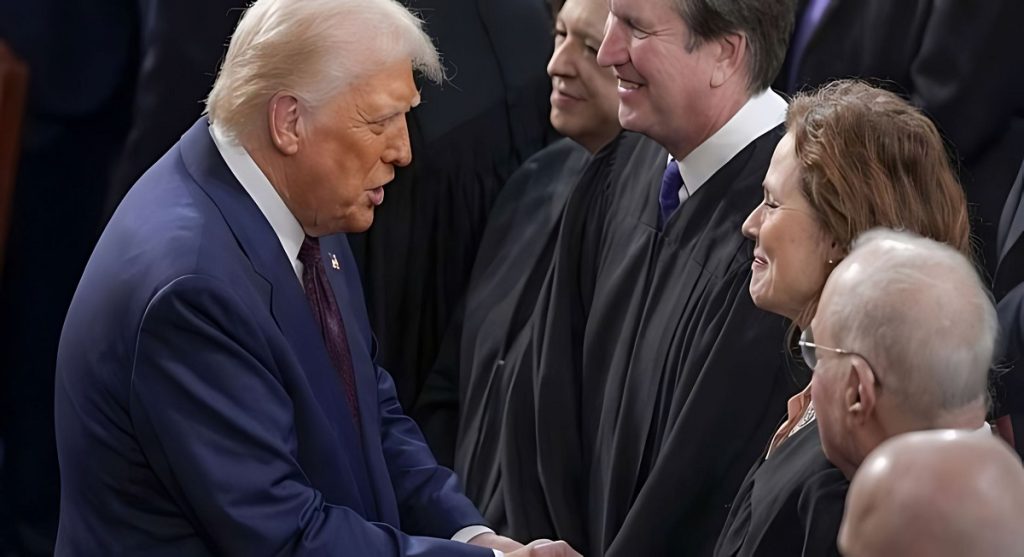
In an 8-1 decision, the justices ruled that a Washington concrete company can pursue a state-court lawsuit against the International Brotherhood of Teamsters over losses it says occurred during a 2017 strike.
The decision in Glacier Northwest Inc. v. International Brotherhood of Teamsters addresses an important question in labor law: when can an employer seek damages from a union over conduct connected to a strike, and when does federal labor law prevent state courts from hearing such claims?
The ruling could have broader implications for employers and unions involved in future labor disputes.
Supreme Court Allows Lawsuit to Proceed
Justice Amy Coney Barrett wrote the majority opinion, concluding that the National Labor Relations Act did not prevent Glacier Northwest from pursuing its state-law claims at this stage of the case.
The dispute began after concrete-truck drivers employed by Glacier Northwest went on strike in August 2017. The company alleged that the timing and circumstances of the walkout caused concrete that had already been prepared to become unusable and created risks involving company equipment.
Glacier argued that the union should be held financially responsible for the resulting property damage.
The union disputed the company’s claims and maintained that federal labor law protected its conduct.
The Supreme Court ultimately determined that the state-law lawsuit should not have been dismissed before the facts surrounding the alleged property damage were fully considered.
Justice Barrett Focuses on Protection of Property
In her opinion, Barrett emphasized what the majority viewed as the union’s failure to take reasonable steps to protect the company’s property from foreseeable damage.
The majority distinguished between ordinary consequences associated with a strike and conduct that allegedly creates an immediate risk of significant physical damage to an employer’s property.
According to the ruling, the union’s actions went beyond simply withholding labor because the circumstances allegedly involved concrete that had already been prepared and equipment that could potentially be damaged.
That distinction was central to the court’s decision.
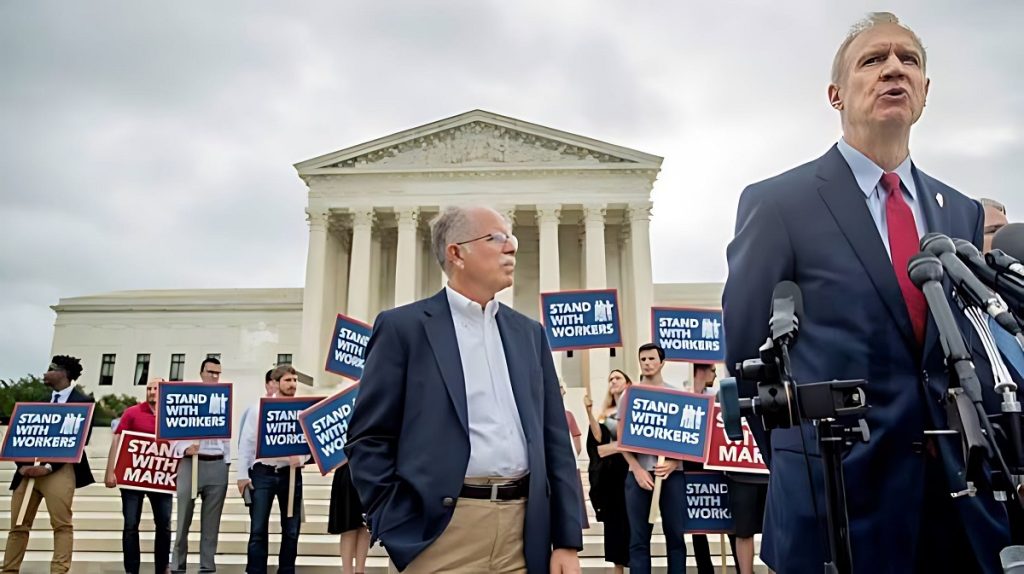
The ruling does not establish that unions can generally be sued whenever a strike results in financial losses. Instead, the decision focuses on the particular facts presented by the Glacier Northwest dispute and the alleged property damage involved.
What the Decision Means for Employers
For employers, the ruling provides an important legal avenue for seeking damages when they believe strike-related conduct results in physical harm to company property.
Businesses involved in labor disputes may now pay particularly close attention to how strikes are organized and whether reasonable measures are taken to protect equipment, materials, facilities, and other assets.
The decision could also encourage employers to pursue state-law claims in circumstances where they believe union conduct falls outside the protections of federal labor law.
However, each dispute will depend on its specific facts, and the ruling does not eliminate federal protections for lawful union activity.
Implications for Labor Unions
Labor organizations have expressed concerns that the decision could create additional legal risks during strikes.
Justice Ketanji Brown Jackson was the sole dissenter. She warned that the majority’s approach could weaken protections associated with the right to strike.
Jackson argued that disputes involving strike conduct and alleged employer losses should generally receive initial consideration from the National Labor Relations Board rather than being immediately handled through state courts.
Her dissent raised concerns about uncertainty for unions attempting to determine which actions during a strike could expose them to state-law liability.
Jackson Warns About the Right to Strike
In her dissent, Jackson argued that the ruling could make it more difficult to determine when striking workers and unions may face lawsuits over economic or property-related consequences of a labor dispute.
She also questioned whether courts should take the lead in resolving complicated factual disputes involving labor relations.
According to Jackson’s reasoning, the National Labor Relations Board has specialised expertise in interpreting federal labor law and should ordinarily have the opportunity to address such disputes first.
Her dissent therefore focused not only on the particular facts involving Glacier Northwest but also on the potential long-term consequences for labor relations.
A Rare 8-1 Agreement
The Supreme Court’s decision was notable for its strong level of agreement.
Although the case involved a politically sensitive dispute over labor rights, the majority included conservative and liberal justices.
Justices Sonia Sotomayor and Elena Kagan joined Barrett’s opinion, producing an 8-1 ruling.
The broad majority suggests that several justices viewed the case as involving a relatively narrow question concerning alleged property damage rather than a wholesale challenge to the right of workers to strike.
Legal analysts have pointed out that the ruling was narrower than an attempt to completely reconsider decades of precedent governing the relationship between federal labor law and state-law claims.
Why the Case Matters
The decision could become an important reference point in future disputes involving strikes, workplace property, and employer claims for financial damages.
The case illustrates the tension between two important principles of U.S. labor law: protecting workers’ ability to organize and strike while also protecting businesses from deliberate or unreasonable damage to their property.
For unions, the ruling highlights the importance of taking reasonable precautions when organizing work stoppages, particularly when materials, equipment, or other property could be exposed to immediate physical harm.
For employers, the decision provides additional clarity about when state-law claims may potentially proceed despite federal labor protections.
Broader Labor Relations Impact
The ruling arrives at a time when labor relations remain an important issue for American workers and businesses.
Strikes and collective bargaining disputes have affected industries ranging from transportation and manufacturing to entertainment, healthcare, logistics, and other major sectors.
As unions continue negotiating with employers over wages, benefits, workplace conditions, and job security, questions surrounding legal protections and financial liability are likely to remain significant.
The Supreme Court’s decision does not resolve every question involving strike-related damages, but it establishes an important boundary concerning alleged property damage and federal labor-law protections.
What Happens Next?
The immediate effect of the ruling is that Glacier Northwest’s lawsuit can proceed in state court.
That means the underlying factual and legal questions surrounding the 2017 strike can receive further consideration rather than being dismissed at the initial stage.
The case could ultimately help clarify how courts should evaluate similar disputes involving labor unions, strikes, property damage, and state-law claims.
For employers and labor organizations alike, the ruling serves as a reminder that strike planning can involve significant legal considerations beyond wages and working conditions.
While the Supreme Court’s 8-1 decision does not eliminate the legal protections afforded to unions and striking workers, it establishes that those protections do not necessarily prevent an employer from pursuing a state-law claim when a union’s conduct allegedly creates foreseeable and imminent damage to company property.