
A growing disagreement over Israel has spilled beyond the Middle East and into relations between the United States and one of its oldest European allies, highlighting how the ongoing conflict continues to reshape international diplomacy.
The latest flashpoint came after Rep. Carlos A. Giménez of Florida announced that he was stepping down as co-chair of the Congressional Friends of Spain Caucus, saying he could no longer represent the group because of what he views as the Spanish government’s increasingly hostile approach toward Israel.
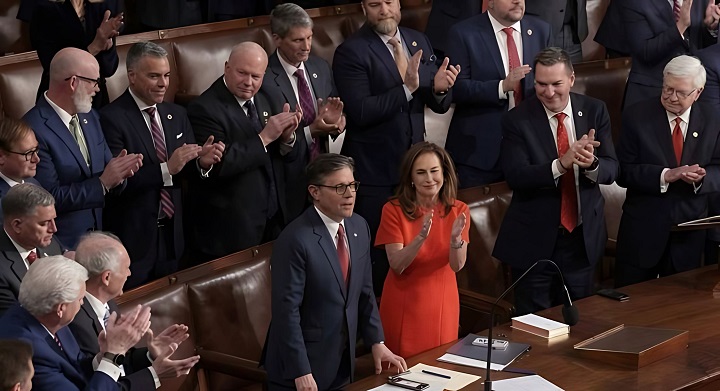
The Republican congressman revealed his decision in a letter to Spanish Prime Minister Pedro Sánchez, saying it was one of the most difficult choices of his congressional career. Giménez emphasized that he has long admired Spain and has spent years working to strengthen the historic relationship between the United States and the European nation, particularly given the deep cultural and economic connections between Spain and South Florida.
“As a proud Cuban-American and a steadfast defender of democracy, international security, and the U.S. alliance network, I did not make this decision lightly,” Giménez wrote.
Despite those longstanding ties, the congressman said recent actions taken by Sánchez’s government convinced him that he could no longer continue serving in a leadership role within the bipartisan caucus.
According to Giménez, Spain has increasingly adopted policies that isolate Israel at a time when the country continues to confront security threats from Hamas, Hezbollah, Iran and other militant groups. He argued that Madrid has shifted from offering legitimate criticism of Israeli policy to pursuing actions that unfairly single out Israel.
The Florida lawmaker also expressed concern that public rhetoric from Spanish leaders has gone beyond ordinary diplomatic disagreements.
“Spain has normalized rhetoric that crosses the line from legitimate policy disagreement into raw antisemitism,” he wrote in his letter.
Among the issues that drew his strongest criticism was Spain’s reported decision to deny entry to members of the Israel Defense Forces (IDF) and certain Israeli government officials.
Giménez called the move both “unprecedented and shameful,” arguing that it sends the wrong message by restricting Israeli military personnel while, in his view, failing to confront organizations committed to Israel’s destruction.
“To bar the brave men and women of the IDF while your political apparatus simultaneously legitimizes terrorist networks and accommodationist policies is a betrayal of Western values,” he stated.
The congressman also criticized Spain’s reported restrictions on military cooperation with Israel, including limitations involving defence exports and transportation of military equipment. He argued those decisions weaken cooperation among democratic allies and undermine broader Western security interests.
According to Giménez, the Congressional Friends of Spain Caucus was established to strengthen cooperation between the United States and Spain through shared democratic values, economic partnerships and security cooperation. He said those common principles have become increasingly difficult to reconcile with the Sánchez government’s current foreign policy toward Israel.
“I remain hopeful that Spain will one day return to a foreign policy rooted in the defense of Western allies and moral clarity against terrorism,” he wrote.
“Until then, I can no longer lend my name to an organization intended to celebrate bilateral friendship while your government actively works to undermine democratic principles.”
His resignation reflects broader divisions among Western allies over the Israel-Hamas conflict, which has exposed significant differences in how governments have responded to the war. While the United States has remained one of Israel’s strongest supporters, several European countries have adopted a more critical position regarding Israel’s military operations in Gaza.
Spain has emerged as one of the most outspoken European governments on the issue, with Prime Minister Pedro Sánchez repeatedly calling for greater international pressure on Israel and advocating stronger humanitarian protections for civilians. His government has argued that its policies are intended to uphold international law and promote a peaceful resolution to the conflict.
Supporters of Sánchez maintain that Spain’s approach reflects concern over the humanitarian situation in Gaza and is consistent with its longstanding foreign policy principles. Critics, however, argue that Madrid has become increasingly one-sided in its criticism of Israel while failing to place equal emphasis on Hamas and other militant organizations.
Giménez’s decision to leave the Congressional Friends of Spain Caucus illustrates how disagreements over the Middle East are increasingly influencing relationships between longtime allies. What began as a regional conflict has evolved into a diplomatic issue affecting partnerships across Europe and North America, with debates over Israel continuing to shape political alliances far beyond the battlefield.